



Table of Contents
- The Lease You Sign Today Shapes the Next Three Years
- Location: The Feature That Overrides Everything Else
- Infrastructure That Actually Works
- The Security Question Nobody Asks Until Something Goes Wrong
- Lease Flexibility: What to Negotiate Before You Sign
- Property Management: The Hidden Factor in Every Tenancy
- Endow Management
- Frequently Asked Questions
The Lease You Sign Today Shapes the Next Three Years
Commercial leases aren’t hotel stays. You can’t check out early because the Wi-Fi is unreliable or the building management doesn’t respond to maintenance requests. The office space you choose locks your business into a location, a cost structure, and a landlord relationship for a fixed period, often two to five years.
That’s the specific reason why the decision deserves more scrutiny than most businesses give it.
Commercial office space in Dar es Salaam has developed significantly over the last decade. The options are wider, the standards are higher, and the expectations of international tenants, MNCs, embassies and development organizations have pushed the market toward a quality benchmark that didn’t exist fifteen years ago. But wider choice means more decisions, and more decisions means more ways to get it wrong.
Here are the features that actually matter before you sign.
Location: The Feature That Overrides Everything Else
Not location as a prestigious address. Location as a functional daily reality.
Where are your clients coming from? Where does your staff live? Which traffic corridors does the city run on, and which ones punish the commuter who chose the wrong side of them? Commercial office space in Dar es Salaam sits across a range of zones: the CBD around Kisutu and Posta, the emerging corridor along Haile Selassie Road, the seafront developments, and the Morogoro Road belt heading toward Ubungo.
Each of these serves a different kind of business. The law firm whose clients expect a CBD address. The NGO whose staff comes from across the city. The regional headquarters whose executives are arriving from Zanzibar or Nairobi and need airport access without an hour of city traffic.
Get the location wrong and the lease fee becomes the smaller problem. The daily friction, staff arriving late, clients struggling to find the address, deliveries that can’t navigate the access road, accumulates into an operational cost that no rent reduction covers.
Infrastructure That Actually Works
In Dar es Salaam, infrastructure is not given. It’s specified, confirmed, and tested before the lease is signed.
- Power backup: Load-shedding is a reality. The office that goes dark for four hours on a Tuesday afternoon while a client presentation is running is not a manageable inconvenience, it’s a business problem. Generator capacity, fuel supply arrangements, UPS coverage for critical systems, these need to be confirmed before, not discovered after.
- Internet connectivity: The bandwidth that handles five people on Zoom simultaneously. The fiber connection that is actually in the building and not pending installation. For commercial office space in Dar es Salaam hosting regional headquarters, the internet infrastructure question is as important as the square footage question.
- Air conditioning: Building-wide or unit-specific. Who is responsible for maintenance? What the response time is when it fails at 2 pm in March.
- Parking: Client parking and staff parking. Covered versus open. Whether the allocation is guaranteed or competitive.
- Lifts and access: For multi-floor buildings, the number of functioning lifts relative to the tenant population. The access control system. The disabled access provisions.
The Security Question Nobody Asks Until Something Goes Wrong
Security in commercial tenancy is not just CCTV cameras and a guard at the gate. It’s the comprehensive question of whether the building’s security infrastructure matches the risk profile of the business operating inside it.
For premium commercial properties hosting diplomatic missions, financial institutions, or regional headquarters, the security brief includes: 24-hour manned security, vehicle access control, visitor management systems, emergency response procedures, and the track record of the security provider managing the building.
Ask for the security contractor. Ask how long the relationship has been in place. Ask what the protocol is for an incident at 3 am. The building management company that has straightforward answers to these questions is the one that has actually thought through the security model rather than installed it for appearances.
Lease Flexibility: What to Negotiate Before You Sign
The lease term, the break clause, the rent escalation formula, the fit-out allowance, the reinstatement obligation at exit. These are the five points that every tenant should understand before signing and that most tenants discover the hard way after.
- Break clause: The right to exit the lease at a defined point, typically after year one or year two, on specified notice. Not every landlord offers this. The ones operating premium commercial properties in competitive markets often do, because a tenant who can leave is a tenant who chose to stay.
- Rent escalation: How rent increases over the lease term. Linked to inflation, to a fixed percentage, or to renegotiation at year three. Know which formula applies and model what it means in the third year, not just the first.
- Fit-out allowance: A contribution from the landlord toward the tenant’s fit-out costs, standard in Grade A office markets internationally, increasingly available in Dar es Salaam’s better-managed commercial properties.
Property Management: The Hidden Factor in Every Tenancy
The lease is with the landlord. The daily experience is with the property manager.
The property manager determines how quickly the maintenance request is resolved. Whether the cleaning contract produces a building that looks professional. Whether the lifts are serviced before they fail rather than after. Whether a new tenant’s fit-out runs on schedule because the building access was managed correctly.
For commercial office space in Dar es Salaam, the property management question is worth asking directly, who manages this building, what is their track record, and can you speak to another tenant?
The answer to that last question tells you more than any brochure.
Endow Management: Commercial Office Space in Dar es Salaam Done Right
Founded in 2014. Managing commercial and residential properties across Dar es Salaam with a client base that includes diplomats, multinationals, and senior executives from CMA CGM, MIC Tigo Tanzania, the EU Commission, and the Irish Embassy.
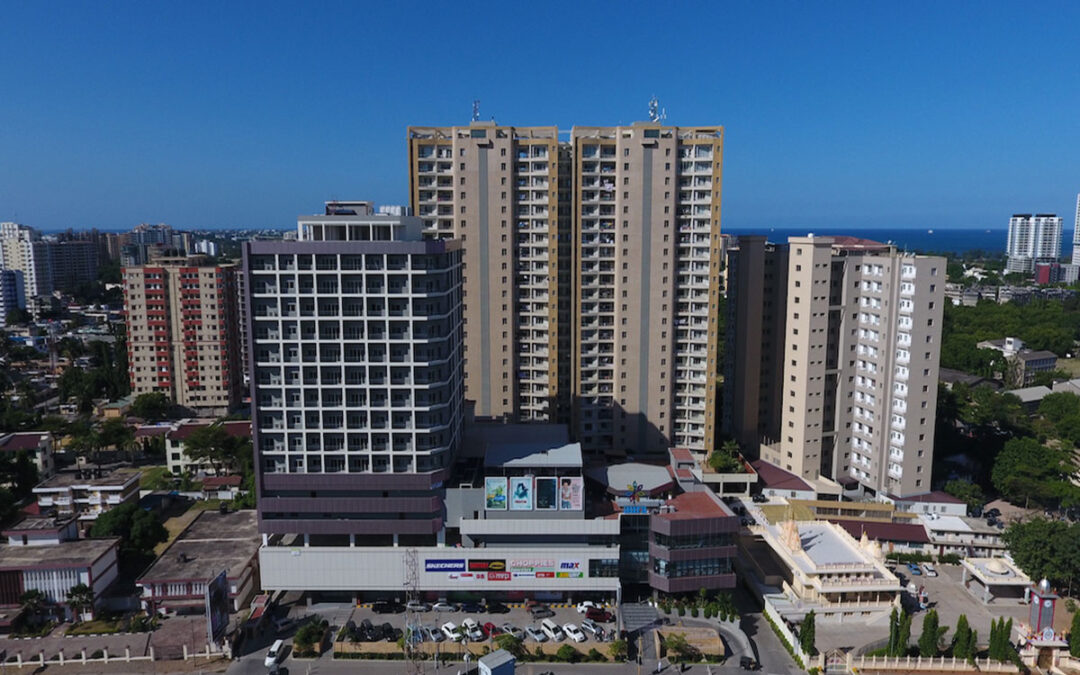
Commercial portfolio: The Wave on Lugalo Street, East Africa’s premium office destination with Indian Ocean views and a sustainability-led design brief. The Luminary on Haile Selassie Road, office and retail with onsite parking in one of the city’s most creative districts. Vijana Mall on Morogoro Road, a multi-use commercial development with retail, entertainment, and accommodation.
Each property managed to the same standard: routine inspections, responsive maintenance, credentialed security partners, professional tenant onboarding, and rent collection systems that protect the landlord and respect the tenant. The premium commercial properties that the Dar es Salaam market benchmarks against.
Frequently Asked Questions
1. What is the current demand for commercial office space in Dar es Salaam?
Demand for Grade A and Grade B+ commercial office space in Dar es Salaam has grown consistently with the city’s expansion as an East African business hub. International organizations, regional headquarters, and growing Tanzanian businesses are all driving demand, particularly for well-managed properties with reliable infrastructure.
2. What should I check about a commercial property before signing?
Location relative to clients and staff, power backup capacity, internet infrastructure, security arrangements, parking allocation, lease flexibility (break clause and escalation formula), and the property management company’s track record. These seven points cover most of what goes wrong in commercial tenancies.
3. How long are typical commercial leases in Dar es Salaam?
One to five years is the common range, with two to three years being standard for most premium commercial properties. Break clauses after year one are available in some buildings. Confirm the escalation formula and the reinstatement obligation before signing regardless of term length.
4. What is included in a managed commercial property in Tanzania?
At minimum, security, maintenance, cleaning of common areas, utility management, and tenant onboarding. The best-managed commercial office space in Dar es Salaam adds routine inspections, responsive maintenance with defined response times, and dedicated property management contact.
5. How do I book a viewing for commercial properties in Dar es Salaam?
For Endow Management’s commercial properties, The Wave, The Luminary, and Vijana Mall use the Book a Visit function. Provide your company name, the property you’re interested in, and your preferred date. The team responds to confirm the appointment.